




 Events
 Webinars
 eBooks
 Guides & White Papers
 ROI Calculator
 REP Tool



How to Personalize the Candidate Experience
Key takeaways:
- A positive candidate experience is personalized, not one-size-fits-all
- Your career site can be personalized and can “remember” past visitors
- The CRM can nurture different job candidates with different tailored messages
- Conversational AI can help provide a tailored candidate experience through the entire candidate journey
- Insights and analytics should be used to improve your hiring process
For a couple of decades, the “candidate experience” has been a hot topic in the talent-acquisition field. There have been a few improvements to the recruitment process here and there. But new technologies are now available to make more dramatic changes to the way job seekers browse through your jobs, apply for your jobs, and communicate with your organization over the long run. The AI available now can even give job seekers a more fair chance at getting an interview.
What follows is a look at some of the ways the candidate experience can now be strengthened, especially using personalization.
Career sites
Career sites can now provide a much more personalized experience. In the past, employers might have posted a few videos of employees talking about their jobs on a career site, and perhaps a few blog posts by employees.
Now, however, a job seeker might search for a job in accounting, and be able to view accounting-specific content. More importantly, if they leave the site and return, the platform remembers who they are and can serve up job descriptions, videos, blogs, and more, all related to accounting.
Improved communication with candidates
We’ve all heard horror stories of job candidates who interviewed multiple times and never heard back from a company. Or, they started an interview with a hiring manager who hadn’t looked at their resume and application and didn’t know who they were. Then there are instances where the application process drags on because managers haven’t provided feedback after their interviews.
All of these issues are now more easily solved with new technology, improving the candidate experience. Here are some examples:
- Managers can get reminders with action items or to-do items such as reviewing candidate profiles or inputting notes
- Candidates not selected for a future round of interviews can receive personalized communications as part of bulk communication features
- Candidates, managers, and recruiters can receive automatic reminders of interviews and decision deadlines to reduce “ghosting” and improve candidate engagement and offer acceptance rates
At Catholic Healthcare, for example, if a candidate gets rejected from a process for one position, they are automatically sent a note that helps them find other roles that may fit, as well as educational resources.
Conversational AI
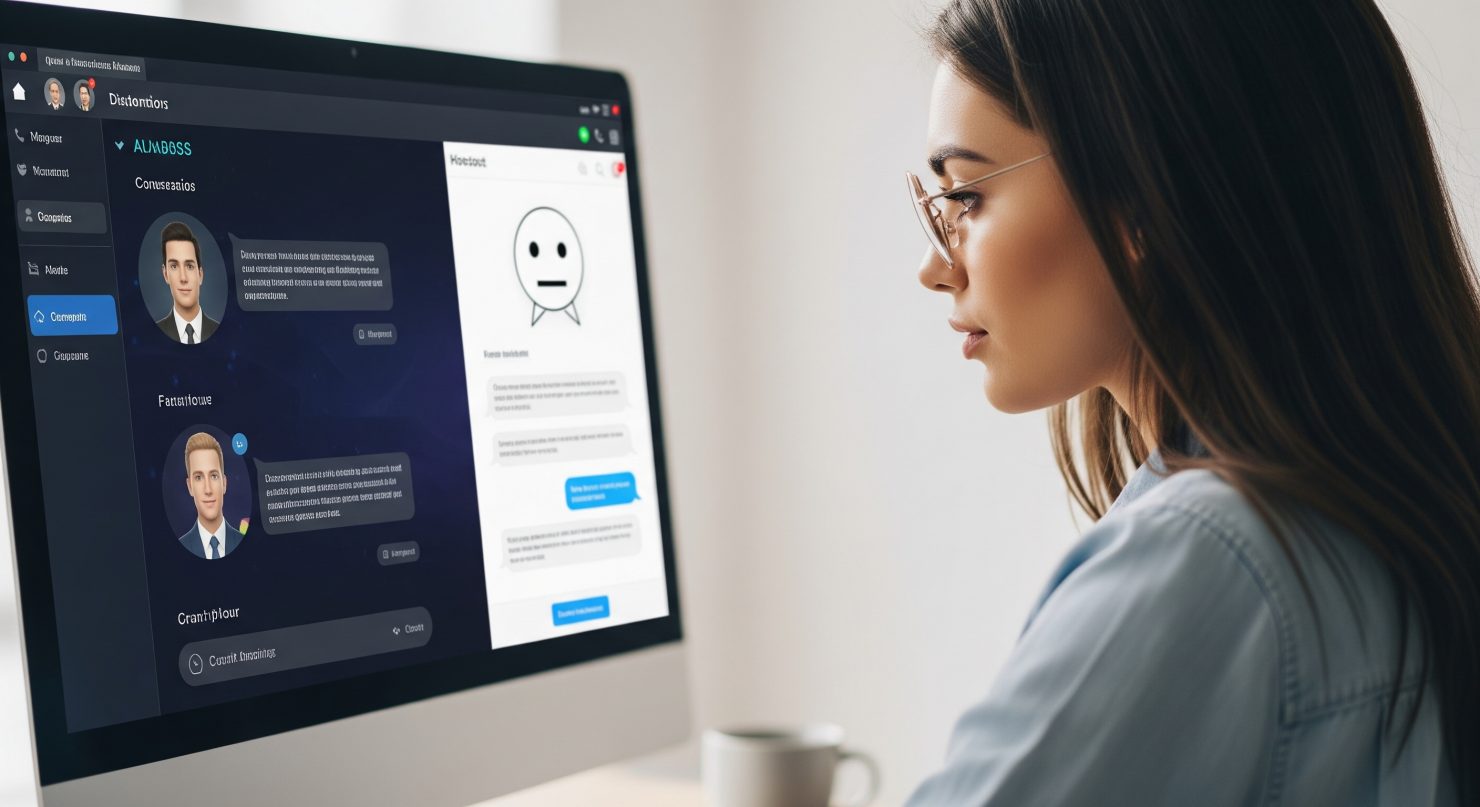
A major improvement over rule-based chatbots, conversational AI is essentially an AI-powered hiring agent that provides personal help to applicants from their first visit to the career site to screening and interview scheduling. Instead of leaving candidates frustrated when their questions aren’t simple and straightforward, conversational AI uses natural language. It’s like talking to a real recruiter, offering personalized job matches, easy applications, and quick updates – on any device, in any language – for a tailored candidate experience at scale.
In the past, a chatbot might have asked, “which do you prefer: remote, hybrid, or in-person work?” and a job candidate could click on one of three boxes. Now, a candidate could type in “I’m tired of working from my hot garage … OK to come in the office at least 3 days?” and the conversational AI can understand the intention behind the question and respond.
Interview scheduling
Candidates don’t have to go around in circles with many emails if you use new interview scheduling tools to improve the candidate experience. Job candidates can self-schedule their interviews, finding a time that works for everyone.
CRM
A candidate relationship management system (CRM) is one part of a personalized candidate experience. When CRMs first became popular, companies would send it out for employer branding. They would email an often-monthly email newsletter to people in their talent communities, updating prospective employees with company news and job listings to give people a feel for the company culture. Now, a more personal experience is possible. Some examples include:
- Reminding employees that a conversational AI feature is available for them to get answers to their questions
- Letting people know of upcoming events that match their individual interests (such as a engineering fair for women in Silicon Valley)
- Providing localized language experiences
- Connecting with prospective employees where they spend their work day, such as through an integration with LinkedIn
A better, fairer chance at the job
There’s one aspect of the candidate experience that leading technologies can provide, and that we shouldn’t overlook. It’s simply a better opportunity for a candidate to be matched to a job.
Anyone in the talent-acquisition field knows what has been happening for too long. An organization posts a job, and within minutes, hundreds of people apply. People are matched by keyword, or someone scans through resumes, spending a few seconds on each job seeker. Unfortunately, quality candidates are sometimes overlooked, when they shouldn’t be.
AI can now automatically review incoming applications and serve up top candidates in seconds. It can provide screening questions that are tailored to each job, highlighting details that even experienced recruiters might overlook. It can collect information like licenses, shift availability, and certifications before the interview starts. This frees up managers and recruiters’ time to spend with candidates, instead of wasting precious interview minutes asking questions that could have been automated.
Instead of mysterious matching criteria, SmartRecruiters believes that recruiters can receive a score for every candidate and an easy-to-understand explanation as each person is a fit (or not).
And — instead of someone spending a few seconds on a resume or a computer just looking for keywords — AI can read between the lines, spotting the less-obvious details that might not be on a resume, like transferable skills, inferred experience, and career potential. It matches a candidate’s fit to the job with context, not just keywords. SmartRecruiters’ technology, Winston Match, helps teams make confident hiring decisions that prioritize fairness, protect privacy, and promote diversity.
Onboarding
A personalized onboarding process is not just about making sure each person has the equipment they need to do their jobs. It includes:
- Allowing managers and human resources professionals the time to spend with each person individually, because much of the administrative onboarding work is automated
- Helping employees plan out their internal-mobility/career goals and the skills they want to develop to achieve them and move internally
- Using this critical time to boost employee referrals by asking new employees who they know who might fit current or future open jobs at the organization
Data and analytics
Data insights are a critical part of improving your candidate experience.
With modern talent acquisition systems, you can access all of your essential recruiting metrics in one place, helping your team to make strategic decisions swiftly and confidently with collaborative tools, data visualizations, and valuable insights.
Some examples of the types of insights that can improve the candidate experience:
- Perhaps people are dropping off your application process at a certain point, either because they are turned off by a screening question, or even due to technical problems for some people.
- You may find that multiple rounds of interviews are not leading to better hires. Perhaps fewer interviews are necessary, without sacrificing quality. Seventy-two percent of job candidates say the smoothness of an interview process would affect their final decision on whether or not to take the job.
- You may learn that certain screening questions are sharply reducing the applicant pool and weeding out people in the job market who may be a great fit. For example, you may find that an MBA requirement, or a requirement that a person have 10 years of experience, or must have worked in a similar company or indusrry, are unnecessary.
- Follow-up surveys can be sent to people who have applied to your jobs to determine how they felt about the experience and what could be improved.
These and hundreds of other insights can help you provide a superior candidate experience.
The candidate experience in action
We’re happy to talk further about what our customers are doing to personalize and improve the experiences of job candidates to attract top talent. Let us know if you’d like us to show you how they are succeeding.
You may also like

The Internal Recruitment Combo That Works: Technology + Change Management
Key takeaways: Recruiting your own employees is as important, or more important, as looking ... Read more
Conversational AI Is a Far Cry From a Chatbot
Conversational AI frees recruiters from manual tasks. It improves candidate engagement, helps ... Read more
July 2025 Product Release Highlights: Talent Matching Powered by Gen-AI
Welcome to the July Product Release! At SmartRecruiters, we’re always innovating to improve our ... Read more