




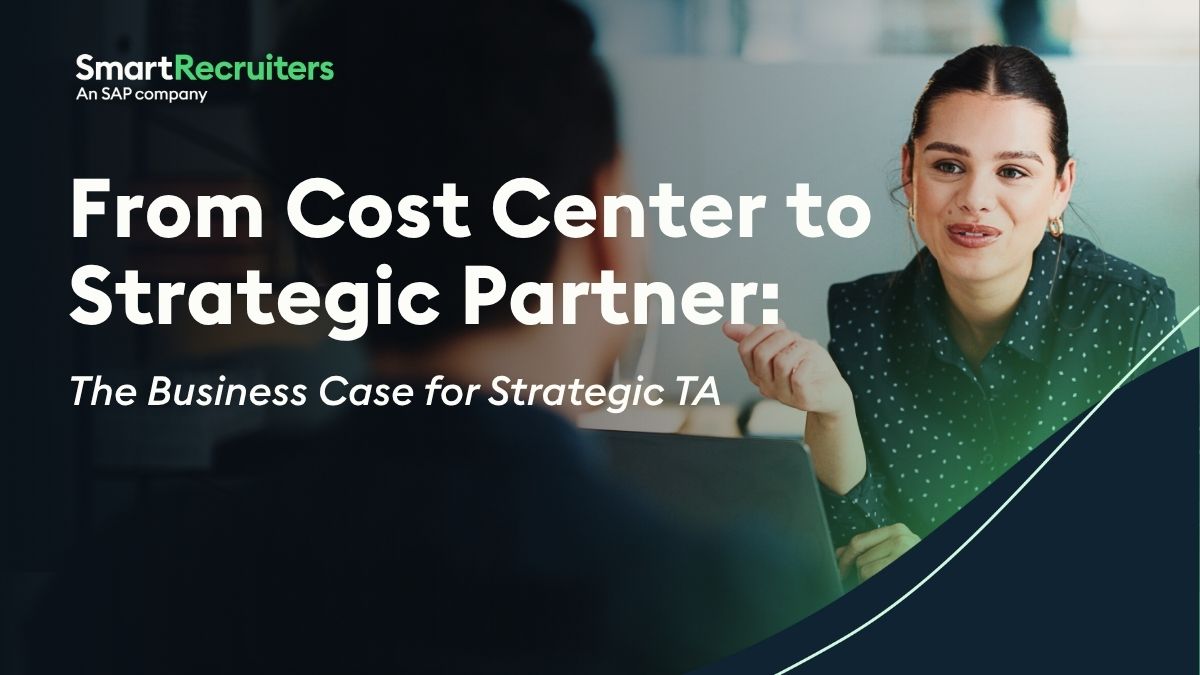
From Cost Center to Strategic Partner: The Business Case for Strategic TA
For years, talent acquisition (TA) has been viewed through a narrow operational lens, measured by req fills, time-to-hire, and cost efficiency. In many organizations, it has been treated as a cost center: a function that executes against business demands rather than shaping them. But in today’s volatile, talent-driven economy, that model is no longer sustainable.
The reality is simple: businesses don’t succeed without the right people. And the ability to attract, hire, and retain that talent is not just an HR function—it’s a core driver of growth, innovation, and competitive advantage. This is why forward-thinking organizations are reimagining TA as a strategic partner at the decision-making table.
The Shift from Reactive to Strategic
Traditional TA models are reactive by design. A business sets a hiring target, and recruiters are tasked with filling roles as quickly as possible. While this approach may meet short-term needs, it often leads to long-term challenges—misaligned hires, high turnover, and escalating costs.
Strategic TA flips this model. Instead of reacting to hiring requests, it proactively informs them. It brings data, market intelligence, and workforce insights into business conversations early—before decisions are finalized. This shift enables organizations to align hiring strategies with broader business objectives, ensuring that talent decisions support sustainable growth.
For example, rather than simply asking “Can we hire 100 engineers?”, a strategic TA function answers deeper questions: Where should we hire them? How long will it take? What will it cost? Are there alternative approaches—like reskilling existing employees or expanding into new markets—that better support the business?
Why Strategic TA Matters More Than Ever
The hiring landscape has fundamentally changed. Candidates expect flexibility, purpose, and seamless experiences. At the same time, organizations are navigating talent shortages, evolving skill requirements, and rapid technological change.
In this environment, talent is no longer a downstream consideration, it’s a constraint and an opportunity. Strategic TA helps organizations manage both.
Companies that invest in mature recruiting strategies see measurable business impact. They are more likely to innovate, retain employees, and deliver strong customer outcomes. Why? Because they are aligning talent decisions with business strategy, not treating them as an afterthought.
Strategic TA also reduces risk. By incorporating talent market data into planning, organizations can avoid overcommitting to initiatives that aren’t feasible from a hiring perspective. It ensures that growth plans are grounded in reality—and supported by the workforce needed to execute them.
Building the Foundation for Strategic Impact
Becoming a strategic partner doesn’t happen overnight. It requires a deliberate shift in mindset, capabilities, and infrastructure.
First, data is critical. Strategic TA leaders don’t just report on past performance, they provide forward-looking insights. They analyze hiring trends, forecast talent availability, and model different scenarios to guide decision-making. This requires robust reporting capabilities and a strong partnership with data and analytics teams.
Second, relationships matter. A seat at the table isn’t given, it’s earned. TA leaders must build credibility with business stakeholders by understanding their goals, speaking their language, and demonstrating how talent impacts their success. This means moving beyond transactional updates and connecting hiring outcomes directly to business KPIs.
Third, technology plays a pivotal role. Modern TA functions rely on integrated platforms that streamline processes, enhance the candidate experience, and provide end-to-end visibility into the hiring funnel. Without the right tools, it’s nearly impossible to operate at a strategic level.
Finally, organizations must invest in the TA team itself. Recruiters need time, training, and resources to move beyond administrative tasks and focus on higher-value activities. Empowered teams are better equipped to deliver insights, influence decisions, and drive innovation.
Changing the Narrative
One of the biggest barriers to strategic TA is perception. Many stakeholders simply don’t understand the complexity—or the impact—of hiring. Changing this narrative is essential.
Strategic TA leaders must make their work visible. They must articulate not just what they do, but why it matters. This means showcasing how hiring decisions affect revenue, productivity, and organizational performance.
It also means shifting the conversation from outputs to outcomes. Instead of focusing on how many roles were filled, the focus should be on the quality of hires, their impact on the business, and how talent strategies are enabling growth.
The Bottom Line
Elevating talent acquisition from a cost center to a strategic partner is not just a transformation for HR, it’s a transformation for the entire business.
Organizations that make this shift gain a competitive edge. They make smarter decisions, adapt more quickly to change, and build workforces that drive long-term success.
In a world where talent is the ultimate differentiator, the question is no longer whether TA deserves a seat at the table. It’s whether businesses can afford to operate without it.
Want to know more? Read our Seat at the Table ebook.
You may also like
Key features of agentic AI in candidate relationship management
Agentic AI transforms candidate relationship management by unlocking dormant talent data, ... Read more
AI in Recruitment: The Future of Hiring for 2026
Discover the transformative role of AI in recruitment and how it reshapes hiring practices for ... Read more
Unlocking Performance: The Role of AI in HR Analytics and Decision-Making
Discover how AI in HR transforms decision-making and analytics to boost employee performance and ... Read more
Latest Resources
- Key features of agentic AI in candidate relationship management
- AI in Recruitment: The Future of Hiring for 2026
- Unlocking Performance: The Role of AI in HR Analytics and Decision-Making
- Your Agentic AI Glossary: 15 Enterprise AI Terms Every HR Leader Should Know
- Data is everything: enabling or improving your talent strategy through improved talent visibility