




 Events
 Webinars
 eBooks
 Guides & White Papers
 ROI Calculator
 REP Tool


Using Change Management to Increase AI Adoption in Hiring
Key takeaways:
- Challenges with an AI implementation include fear of job loss and resistance to changing long-held processes
- Partner with the right tech company that cares about people, processes, and technology — true transformation
- Ongoing training and communication help set the stage for success when adopting AI
The edict has come from many CEOs to “use AI” and “adopt AI” throughout many organizations. Talent-acquisition departments are no exception. Change management for recruiters and others involved in the hiring process such as managers and even job candidates is a must.
Below, we talk about some of the change-management challenges when it comes to increasing the use of AI in the hiring process. Then, we review some effective ways of succeeding when managing change.
Challenges in AI adoption and ideas for managing change
Here are a few of the many critical areas to address when it comes to the big changes in HR departments that AI can bring.
Concerns about jobs.
With headlines like “Perplexity CEO predicts AI could replace recruiters and assistants in as little as six months,”
It’s no wonder people are worried. Recruiters have seen many peers lose jobs over the last couple of years, and their nervousness is understandable.
Ways to address it:
Although learning to use AI won’t guarantee a recruiter a job, keeping up with the latest technology is a positive, not a negative, when it comes to job security. If AI can help automate some of the tedious and manual recruiter work, recruiters can focus on the highest-value work, which is probably the kind of work that led them to the profession in the first place.
Concerns about fairness and compliance.
Some recruiters are concerned that AI is biased or a “black box” and will be unfair to job candidates.
Ways to address it:
Security, fairness, and compliance must be a high priority of any vendor you select. AI technology companies should be able to explain how their AI works. If they can’t explain it beyond saying such things as “AI then works its magic” or “I can’t really explain it, it’s very technical” — be wary.
Also, select a vendor that has something akin to a “trust committee.” These groups meet monthly to review new legislation, regulation, and compliance issues with customers. AI laws are changing quickly, and any AI technology company you work with should be keeping up with the changes.
If recruiters see the commitment to fairness of your TA leadership and any AI technologies you work with, it will help ease their concerns.
Selection practices that are hard to change.
Many organizations have been identifying and selecting people the same way for a long time. For example, managers are used to looking for people who have a similar title to the open job and have done a similar job before. They’re used to favoring (if even subconsciously) people who work at big-name companies or candidates who attended elite schools.
Ways to address it.
With AI used to source and engage candidates, companies are now often looking to hire people based on their skills, not their pedigree. The AI can surface non-traditional candidates who have adjacent skills or experience but perhaps didn’t attend a big-name college, or didn’t graduate at all. Managers need to be won over, though, to this new approach. Use data to make your case to hiring managers. To take one example, consider the situation where the AI has surfaced a military veteran for a job, due to their impressive skills, even though they may not have the exact civilian experience. By using data that show that teams with veterans produce better financial results and higher customer satisfaction, you can change minds.
Manual tasks that are hard to eliminate.
A great example here is interview scheduling. Some companies have struggled to get rid of all the time spent on scheduling interviews, because some hiring managers didn’t want to let go of access to their calendars.
Ways to address it.
This is another good example where data is essential. When you present the case that using technology to schedule interviews has cut time to hire 60% in some cases, it’s very difficult to turn that opportunity down.
Lack of ongoing training and communication.
Change management in HR is sometimes a “one-time” event, and new recruiters, hiring managers, and others who start their jobs after the technology is implemented are left partly in the dark.
Ways to address it.
Managing change is an ongoing process that requires constant engagement with your audience. You should tailor messages for each stakeholder group (recruiters, hiring managers, employees, candidates, etc). As you select AI technology, make sure the provider has an ongoing plan for change management, communication, and training. When we work with customers, we hold quarterly business reviews, monthly training, or frequent q-and-a sessions to make sure everyone’s questions are answered.
Employees are ignored.
You want to avoid a situation where recruiters are trained on a new AI technology but company employees are not. The platform may be used, for example, to match employees with internal jobs or gigs, so employees will have questions about how the AI matches are made.
Ways to address it.
Some AI technologies have templates or drafts of communications to employees that explain their AI. You can often get the vendor’s help and modify the communication to fit your workforce, so people understand how the AI works, why you have implemented it, and how it can benefit them.
A change management challenge … and success story
We worked with a shoe manufacturer that was not fully prepared to manage the change that comes with new technology.
The company implemented new technology but underestimated the complexity associated with a successful implementation. It allocated only a third of the necessary time and resources. As a result, the end users were either unfamiliar or uninterested in using the system, and the company missed its initial goals. For example, only 30% of people who participated in an interview used the system to leave a review of candidates.
We worked with the customer to roll out a proper change-management process. A clear explanation of the technological change was explained to every stakeholder. Objectives, rules, and responsibilities were spelled out. “Recruiter ambassadors” were appointed to help lead others with any questions and concerns. We set up a monthly training program so that new hires were trained, and experienced users of the technology were aware of new developments and had a venue to ask questions. We made it fun, using an Olympics theme with the training.
After these improvements to the process, hiring manager engagement rose dramatically and usage of the system improved sharply.
We are happy to help you with change management as you make the transition to an AI-driven talent-acquisition department. Let us know how we can help. You can also learn more by reading about the 9 Keys to Change Management in a Talent Acquisition Transformation.
You may also like
5 ways to improve your internal hiring
Recruit your own employees like you do external candidates. Provide internal mobility tools to ... Read more
The Rise of the Orchestrator: Why Coordination Is the New Superpower at Work
Learn why the orchestrator is becoming essential as organizations move towards integrated, ... Read more
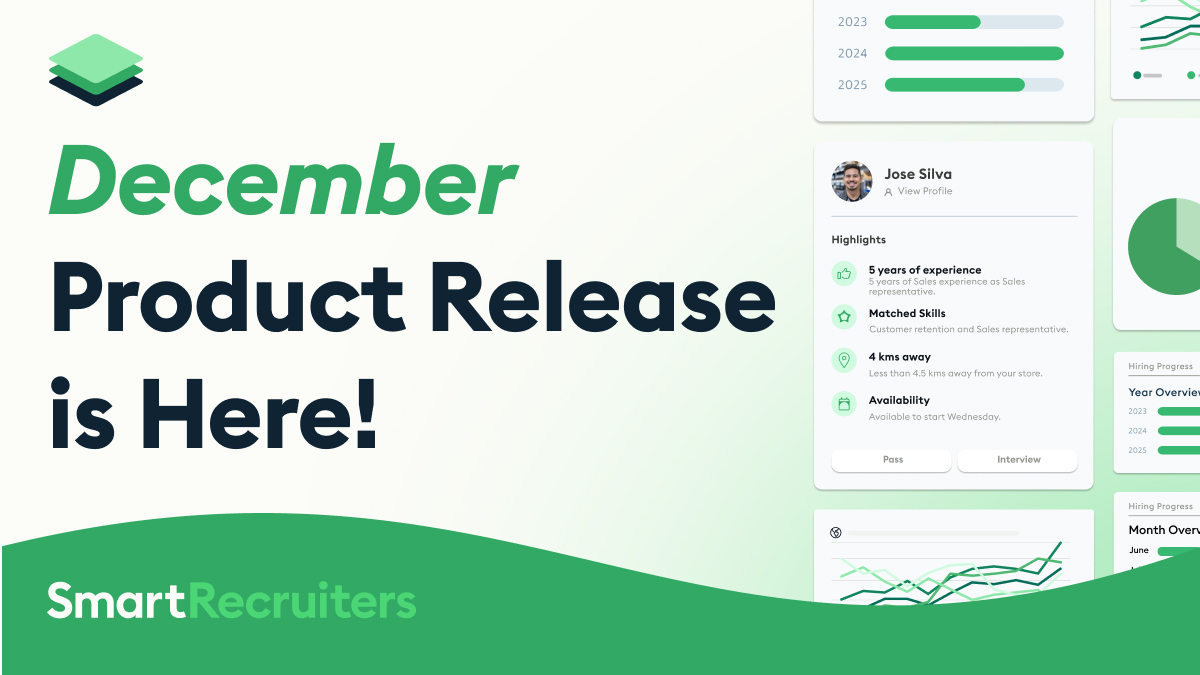
December 2025 Product Release Highlights: Track Winston Chat Insights and Improve Talent Matching with New Models
Discover the December 2025 Product Release from SmartRecruiters, featuring new tools to optimize ... Read more